
Fenestrated Tracheostomy Tube with Inner Cannula
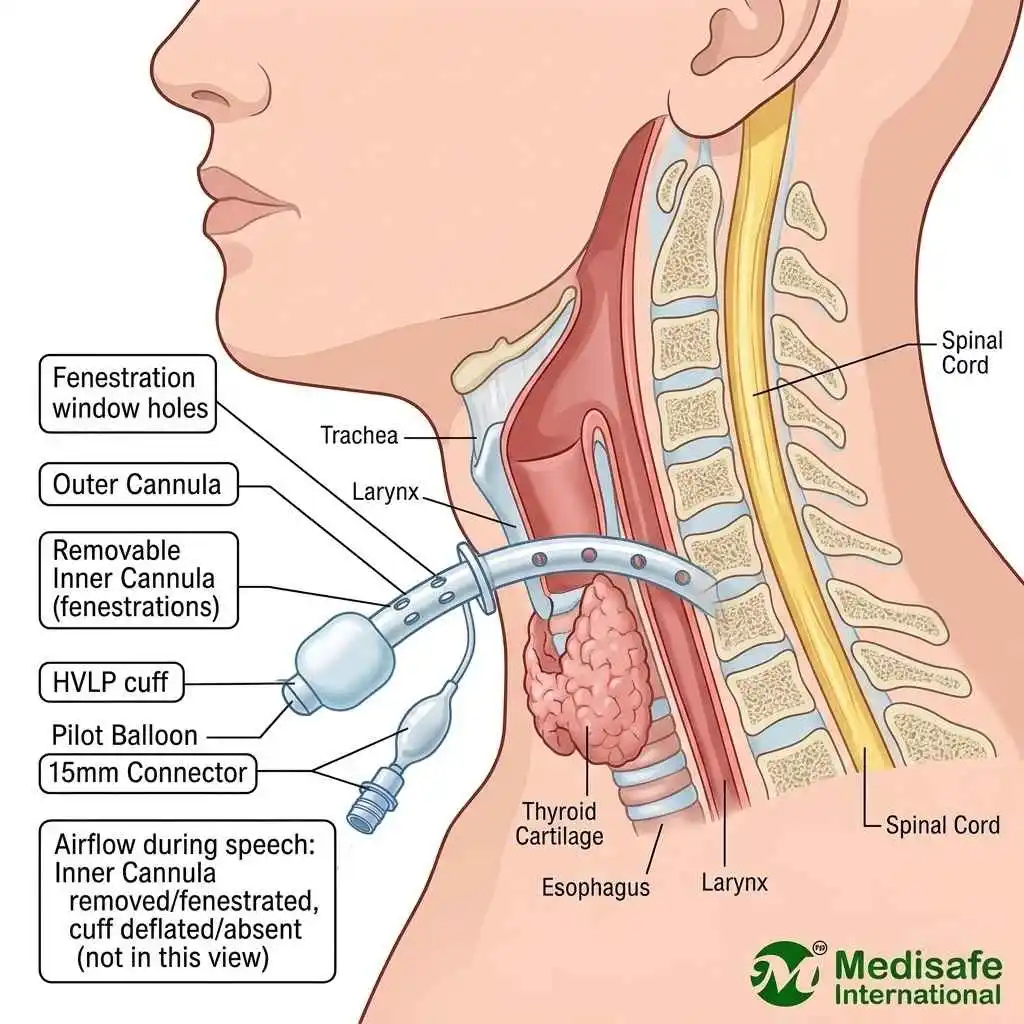
A Fenestrated Tracheostomy Tube with Inner Cannula features small openings (fenestrations) on the outer curve of the outer cannula. When used with a fenestrated inner cannula and with the cuff deflated (or using a red decannulation cap/speaking valve), air passes upward through the fenestrations across the vocal cords, enabling patient vocalization and assisting in the weaning process.
1. Key Features & Benefits
- Fenestrated Outer Curve: Multiple small openings on the outer shaft direct exhaled airflow through the larynx to facilitate speech and coughing.
- Dual Inner Cannula System: Includes both fenestrated (for speaking/weaning) and non-fenestrated inner cannulas (for suctioning and mechanical ventilation).
- HVLP Cuff Control: Allows full cuff inflation for mechanical ventilation or aspiration prevention, and cuff deflation for speaking trials.
- Biocompatible Thermo-Sensitive Material: Softens at body temperature to conform comfortably to tracheal anatomy.
- Radiopaque Line & Standard 15mm Connector: Enables X-ray verification and universal breathing circuit attachment.
2. Primary Clinical Applications
- Speech Rehabilitation: Allows vocalization for long-term tracheostomy patients during ventilator weaning.
- Decannulation Weaning: Tests the patient's ability to breathe through their upper airway prior to tube removal.
- Airway Hygiene & Suctioning: Replacing the fenestrated inner cannula with a non-fenestrated inner cannula allows safe, effective tracheal suctioning without tissue trauma through the openings.