
FAQ ! Silcone Resuscitator ! Medisafe International
General & Usage FAQs
1. What is a silicone resuscitator?
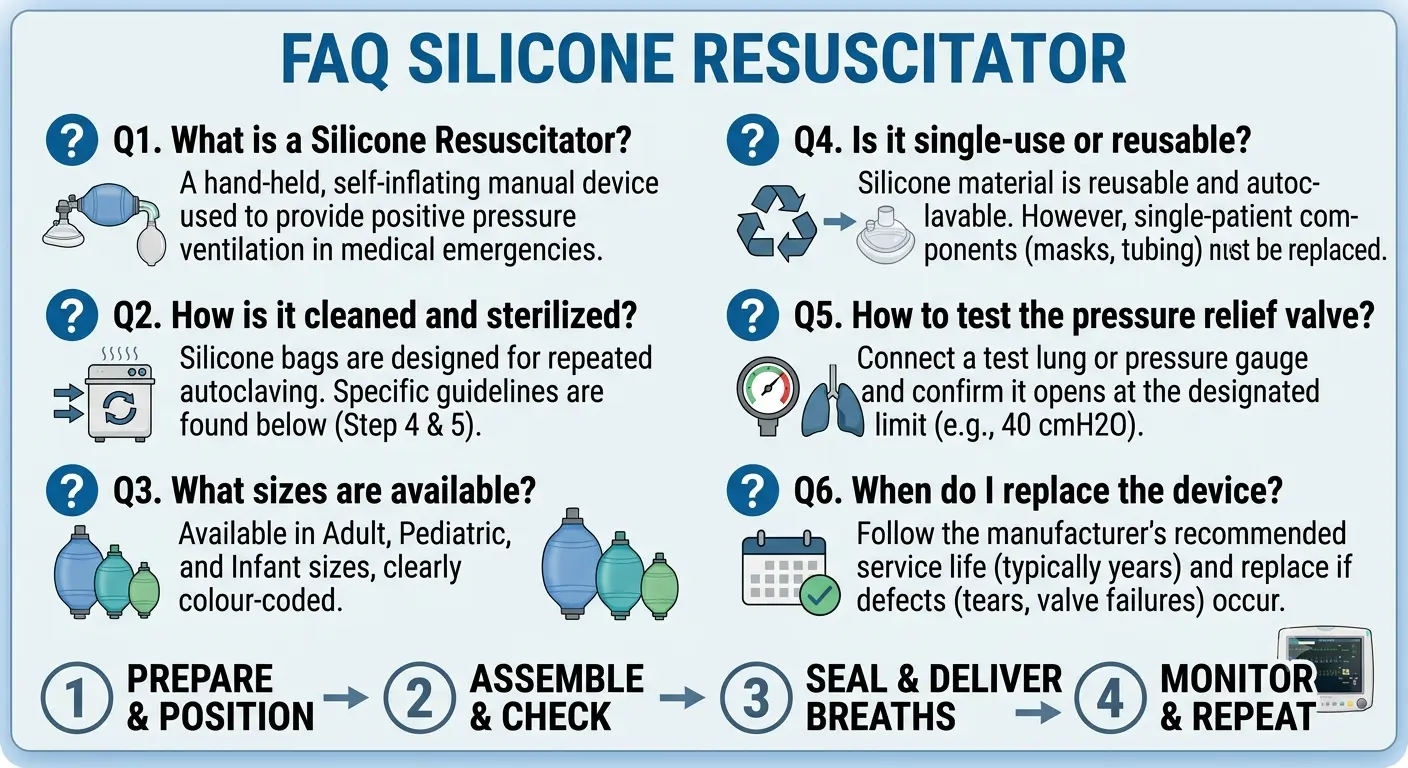
A silicone resuscitator is a reusable, hand-held, self-inflating manual ventilation device (commonly known as a Bag-Valve-Mask or BVM). It is used by medical professionals to provide positive pressure ventilation to patients who are not breathing or who are breathing inadequately.
2. What is the difference between a silicone resuscitator and a PVC/disposable resuscitator?
-
Silicone Resuscitators: Reusable, highly durable, and designed to withstand repeated cleaning and high-temperature autoclave sterilization. They offer superior elasticity and bag recoil across a wide temperature range.
-
PVC Resuscitators: Single-patient-use (disposable) devices meant to be discarded after a single session to reduce cross-contamination risks without the need for sterilization.
3. What sizes are silicone resuscitators available in?
Silicone resuscitators typically come in three primary sizes tailored to patient weight and body mass:
-
Adult: Designed for patients weighing over 30 kg (66 lbs).
-
Pediatric: Designed for patients weighing between 10 kg and 30 kg (22–66 lbs).
-
Infant / Neonatal: Designed for newborns and infants weighing under 10 kg (22 lbs), often featuring a built-in 35–40 CM-H2O pressure relief valve to prevent lung barotrauma.
4. What components are included in a standard silicone resuscitator kit?
A complete silicone manual resuscitator assembly typically includes:
-
Reusable silicone self-inflating bag
-
Patient valve assembly (non-rebreathing valve)
-
Silicone face mask
-
Oxygen reservoir bag (often single-use)
-
Oxygen supply tubing
-
Integrated or optional PEEP (Positive End-Expiratory Pressure) valve connector
Cleaning, Sterilization & Maintenance FAQs
5. Can all parts of a silicone resuscitator be autoclaved?
Most primary components—including the silicone bag, patient valve, and silicone mask—are steam-autoclavable up to 121 C to 134 C (refer to the specific manufacturer guidelines).
-
Note: Oxygen reservoir bags and oxygen tubing are frequently made of non-autoclavable materials and are intended for single-patient use or cold chemical disinfection only. Always detach them before autoclaving.
6. How should a silicone resuscitator be cleaned before sterilization?
-
Disassemble: Fully disassemble all detachable components (mask, valve, bag, reservoir).
-
Wash: Rinse off organic matter with cool water, then soak and wash in a neutral Ph enzymatic detergent solution.
-
Rinse & Dry: Rinse thoroughly with distilled/sterile water and air-dry completely prior to packaging for autoclaving.
7. How often should a silicone resuscitator be tested?
A functional check (leak test and valve inspection) should be performed:
-
Immediately after reassembly following cleaning/sterilization.
-
During routine shift or equipment checks in emergency response vehicles and medical wards.
Clinical & Safety FAQs
8. What is the purpose of the pressure-relief (pop-off) valve?
The pressure-relief valve limits the maximum ventilation pressure delivered to the patient's lungs (typically set at 35-40 Cm-H2O for infants and children). This safety mechanism prevents over-pressurization (barotrauma) and reduces the risk of stomach inflation (gastric distension). It can be manually overridden if higher pressure is clinically required.
9. Why is an oxygen reservoir bag attached?
Without an oxygen reservoir bag, a manual resuscitator connected to an external oxygen flow delivers approximately 40–50% oxygen FiO2. Attaching an oxygen reservoir bag allows the device to deliver near 100% FiO2 to the patient.