
FAQ ! ET Tube Holder
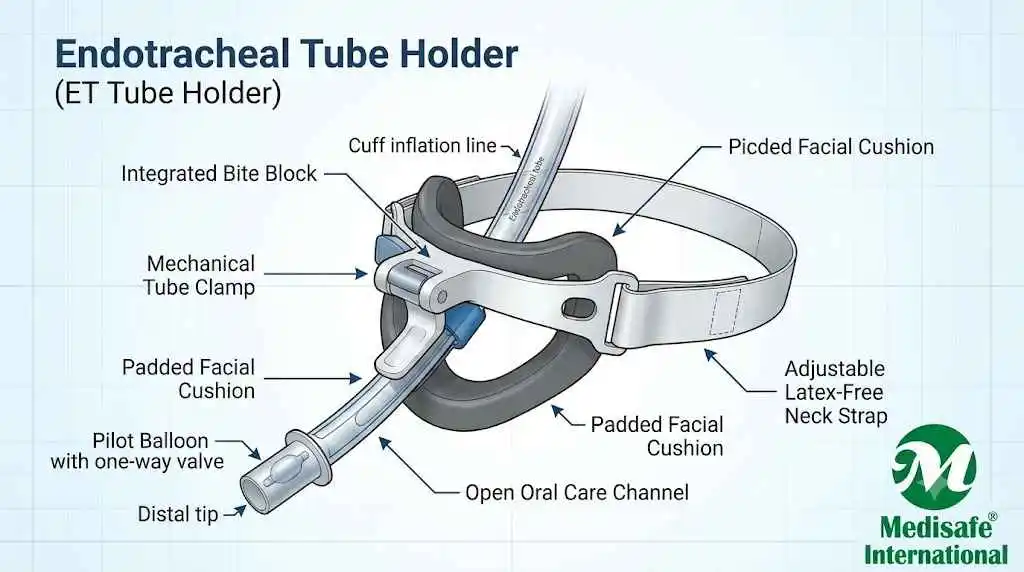
A clinician-friendly, comprehensive FAQ for the Endotracheal Tube (ETT) Holder, structured for clinical staff training, patient care guidelines, and promotional medical collateral:
FAQ: Endotracheal Tube (ETT) Holder
1. What is an Endotracheal Tube Holder?
An Endotracheal Tube Holder is a specialized medical securement device designed to hold an oral endotracheal tube firmly in position. It replaces traditional adhesive tape, utilizing adjustable padded neck straps, repositionable cheek pads, and an integrated bite block to prevent accidental extubation and protect facial skin.
2. Why use a dedicated ETT Holder instead of adhesive tape?
Enhanced Safety: Provides superior mechanical holding power, drastically reducing the risk of unplanned extubation or tube displacement.
Skin & Tissue Protection: Padded facial pads and latex-free neck straps eliminate tape-related skin tears and reduce moisture-associated skin damage (MASD).
Integrated Airway Protection: Built-in bite blocks prevent patients from biting down on the tube, ensuring uninterrupted ventilation and preventing tube occlusion.
Efficient Oral Care: Designed with open side channels, allowing nurses and respiratory therapists to perform routine oral suctioning, mouth hygiene, and tube repositioning without removing the securement device.
3. How do you properly apply an Endotracheal Tube Holder?
Prepare & Clean: Clean and dry the patient’s face and neck. Note and verify the ETT depth mark at the lip line.
Manual Stabilization: Always have a second clinician manually hold the tube at the lip line during application.
Position Device: Insert the integrated bite block gently into the patient’s mouth alongside the ETT, resting the padded neck strap behind the neck.
Secure the Tube: Engage the device’s tube clamp, screw, or securement strap firmly around the endotracheal tube.
Adjust Straps: Fasten the facial and neck straps snugly, checking tension with the Two-Finger Rule (ensuring 1–2 fingers fit between the neck strap and skin).
4. How tight should the neck strap be?
The strap should be snug enough to prevent slipping or tube displacement, but loose enough to avoid compromising venous return or creating pressure sores. You should be able to slide one to two fingers comfortably under the strap at the side of the neck.
5. How often should the ETT Holder be repositioned or replaced?
Daily Repositioning: Shift the position of the tube from one side of the mouth to the other at least once every 24 hours (per hospital protocol) to prevent lip pressure sores.
Skin Inspection: Unclip or lift cheek pads during daily care to inspect underlying skin for breakdown or moisture accumulation.
Replacement: Replace the holder immediately if it becomes heavily soiled, wet, or damaged, or if the securement mechanism loses adhesion/tension.
6. Is the ETT Holder latex-free and safe for pediatric patients?
Yes, high-quality medical ETT holders are 100% Latex-Free and made with hypo-allergenic materials. Holders are manufactured in distinct sizing configurations (Pediatric, Adult, and Large Adult/Bariatric) to ensure a safe, proportional fit.