
Endotracheal Tube ! Cuffed ! Uncuffed ! Medisafe International
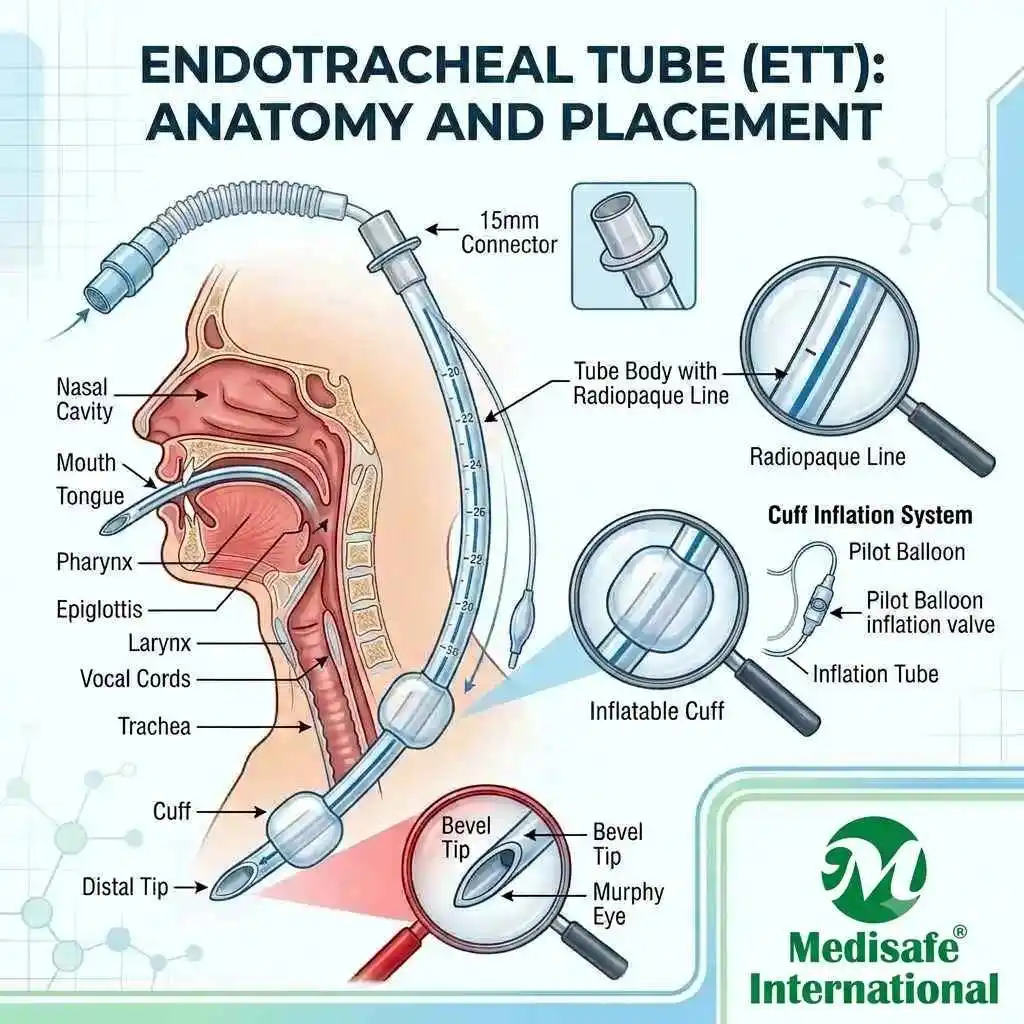
Endotracheal Tube (ETT) — Product Overview & Specifications
An Endotracheal Tube (ETT) is a sterile, single-use airway management catheter inserted through the mouth or nose into the trachea to establish and maintain an open airway, ensure adequate oxygenation and ventilation, and protect the lungs from aspiration.
1. Key Product Features & Technical Specifications
- Medical-Grade PVC Construction: Formulated from thermo-sensitive PVC that softens at body temperature to conform comfortably to patient airway anatomy.
- Low-Pressure, High-Volume (HVLP) Cuff: Provides an effective low-pressure seal against the tracheal wall, minimizing the risk of tracheal mucosa ischemic injury during mechanical ventilation.
- Murphy Eye: A secondary ventilation hole positioned opposite the bevel at the distal tip to maintain airflow if the primary distal opening becomes obstructed.
- Radiopaque Marker Line: Full-length X-ray visible line for precise assessment of tube insertion depth relative to the carina.
- Universal 15mm Proximal Connector: Ensures standardized attachment to ventilator circuits, resuscitation bags, and breathing systems.
- Depth Calibrations: Clear depth markings along the tube body for rapid verification of placement at the lip line or incisors.
2. Primary Clinical Applications
- General Anesthesia & Surgical Care: Maintains positive pressure ventilation and airway control during surgical procedures.
- Critical Care & Mechanical Ventilation: Delivers continuous respiratory support in Intensive Care Units (ICUs) for acute respiratory failure.
- Emergency Airway Management: Establishes immediate airway control during cardiac arrest, severe trauma, or altered mental status.
- Aspiration Risk Mitigation: Inflatable cuff protects the lower airway from stomach contents, blood, or secretions
3. Quick Reference Setup Steps
- Pre-Check: Verify cuff integrity by inflating with air before insertion, then fully deflate.
- Placement: Perform endotracheal intubation using direct or video laryngoscopy.
- Cuff Inflation: Inflate the pilot balloon to achieve optimal seal pressure (typically 20–30 cm H₂O).
- Verification: Confirm placement via bilateral breath sounds, chest rise, end-tidal CO₂ (EtCO₂), and chest X-ray.
- Securement: Fix tube position using an approved ETT holder or adhesive securement device.